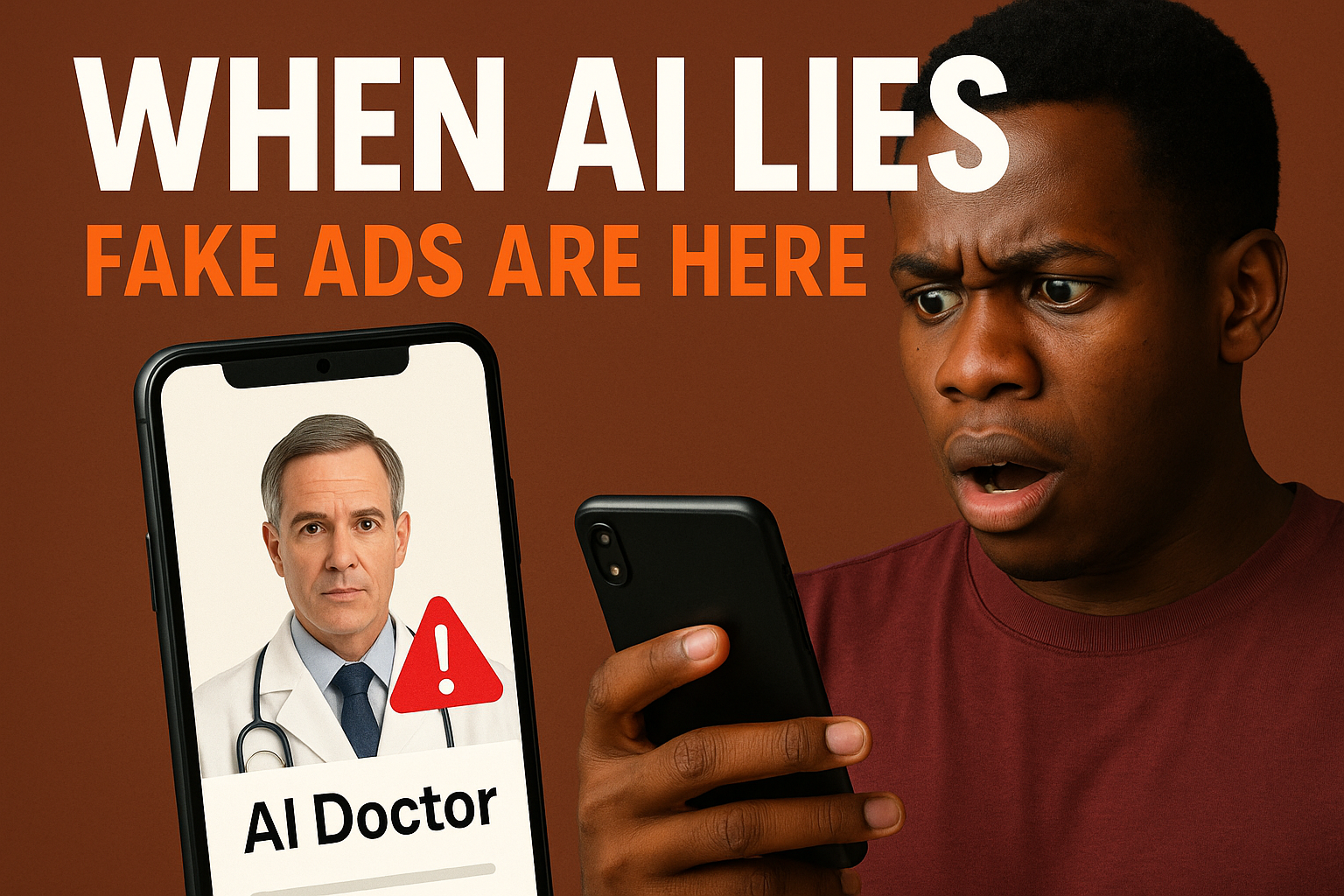
These days, you can be scrolling on your phone, minding your own business, and suddenly a “doctor” appears on your screen. He looks serious. He speaks well. He promises that a certain pill will cure diabetes, back pain, stress, bad luck, and maybe even your neighbour’s jealousy.
Only one small problem:
That doctor does not exist. He was created by AI.
Welcome to the new world of artificial intelligence advertising — where seeing is no longer believing.
AI Is Powerful… and a Bit Too Clever
Artificial Intelligence is no longer a thing for science fiction movies or big tech companies only. It is already here in Africa. Zambian businesses are using AI to design posters, write adverts, edit videos, and even answer customer questions on WhatsApp.
That’s not a bad thing. In fact, it’s very useful — especially for small businesses with limited money.
But like vegetables with too much salt, AI can quickly become a problem if not handled properly.
In some countries, scammers are now using AI to:
Create fake videos of celebrities
Invent “experts” and “doctors”
Show fake before-and-after photos
Push dangerous health products, betting platforms, or miracle investments
South Korea has seen this problem explode — and they decided enough is enough.
What South Korea Is Doing About It
South Korea is introducing some of the toughest AI advertising rules in the world. Their goal is simple:
If AI is used to create an advert, people must be told clearly.
No hiding. No pretending. No “this doctor is real, trust me bro”.
From 2026, AI-generated adverts in South Korea must be clearly labelled as AI-generated content. If you remove the label or try to hide it, you are breaking the law.
And they are not joking around:
Heavy fines
Big penalties
Even damages up to five times the harm caused.
In short: play games with labelling your AI content, and AI will play games with your wallet.
Why This Matters for Africa
You might be thinking, “That’s South Korea, not Zambia.”
But honestly? The same problems are already knocking on our door.
In Africa:
Many people trust what they see online
Older people are especially vulnerable
Health misinformation spreads fast
WhatsApp forwards travel faster than facts
If a fake AI “doctor” speaks good English and wears a white coat, many people will believe him. If he adds “research shows…” — game over.
The danger is not AI itself.
The danger is unlabelled AI pretending to be real human authority.
Platforms Are Also Being Put on Notice
South Korea is not only blaming advertisers. They are also telling platforms like social media companies:
“You profit from this content. So you must help clean it up.”
Platforms will now be responsible for:
-Checking if AI ads are properly labelled
-Removing fake or harmful content quickly
-Not turning a blind eye because the ad is getting clicks.
This is important for Africa too. If platforms don’t act, scammers will always win because they can post today, disappear tomorrow, and open a new account next week.
Speed Matters in the AI Age
One big lesson from South Korea: slow action equals real harm.
AI scams spread very fast. Waiting three days to review a fake ad is like locking the door after the goat has finished eating your maize.
If AI creates something that looks real and could mislead people — label it clearly.
South Korea is moving towards:
-24-hour review windows
-Emergency takedowns for clearly dangerous ads
-Using AI to fight AI (yes, fire with fire).
Final Thought
Africa will need the same thinking. Manual checking alone won’t be enough.
Protecting the Most Vulnerable
A key reason South Korea is acting now is to protect:
-Older people
-Less tech-savvy users
-People looking for health or financial help.
In Africa, this group is large. And when trust is broken too many times, people stop believing even real doctors, real advice, and real institutions.
That is dangerous for society.
But What About Innovation?
Here’s the good news:
South Korea is not banning AI.
They still want:
-AI innovation
-Tech leadership
-New businesses
-Creative use of technology
They are simply saying:
“Use AI, but be honest about it.”
That balance is important for Africa. We don’t want rules that kill innovation — but we also don’t want a digital Wild West where anything goes.
A Simple Rule Africa Can Learn From
If there is one simple idea African regulators, businesses, and creators can borrow, it is this:
That’s it.
No drama. No fear. Just honesty.
AI is like a very smart child. If guided well, it can help the whole family. If left alone with matches, it will burn the house.
South Korea has decided to guide it firmly. Africa would be wise to start thinking the same way — before fake doctors, fake experts, and fake promises flood our screens.
Because in the age of AI, truth needs a label too.