A Story That Begins in Zambia
Have you ever wondered where rivers come from—not just in terms of water, but in terms of meaning?
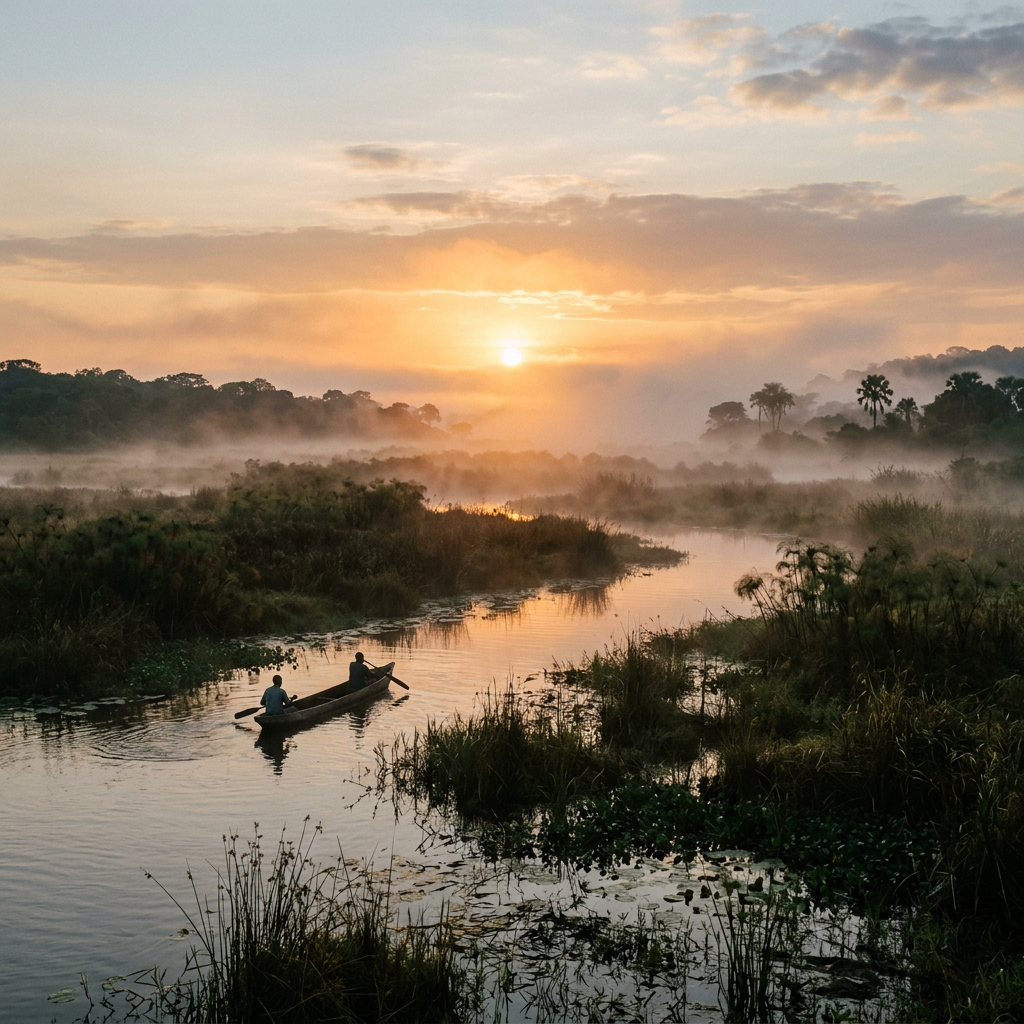
In northern Zambia, far from the noise of cities and far from the lines drawn on maps, water begins to gather quietly. Rain water seeps through the soil until it hits rock bottom. It slowly finds direction and settles lower down in wetlands. Some of it finds its way into cracks in rocks in the highlands and travels down fissures to the low lands where it may find release as springs. What starts as a soft trickle becomes a stream, then something stronger, more confident. This is where the story of one of the world’s greatest rivers begins—not with force, but with patience.
Here, in places like the Bangweulu wetlands and the source of the Chambeshi River, you won’t find dramatic waterfalls announcing the birth of a giant. Instead, you find something humbler. Water moving through grass. Life growing around it. Communities living with it, not over it.
And yet, this quiet beginning is part of something enormous.
Because this same water will travel far beyond Zambia. It will cross into the Democratic Republic of Congo, merge with other rivers, grow wider, deeper, and more powerful—until it becomes the mighty Congo River, one of the most important waterways on Earth.
So where does the Congo River come from?
In one sense, it comes from Zambia.
But in a deeper sense, it comes from everywhere along its path.
That’s the thing about rivers—they don’t respect borders. They don’t stop to check passports. They don’t recognize the lines humans have drawn across maps. A river flows where the land guides it, connecting places that politics tries to separate.
The Chambeshi River does not “leave” Zambia in the way a person might leave a country. It simply continues. It becomes the Luapula, then flows onward, eventually feeding into the Congo system. The name changes. The surroundings change. But the water itself remains part of one continuous story.
And maybe that’s something worth thinking about.
Because in many ways, people are not so different.
Across Africa, cultures shift, languages evolve, and traditions adapt from one region to another. But beneath those differences, there are deep connections—shared histories, shared rhythms, shared ways of seeing the world. Just like a river, identity is not confined to a single point of origin. It flows, it blends, it grows.
Colonial borders tried to divide what was never truly separate. Lines were drawn across communities, across ecosystems, across rivers themselves. Zambia and the Democratic Republic of Congo, for example, are separated on a map—but the Luapula River runs between them, linking rather than dividing. People on both sides fish the same waters, tell similar stories, and depend on the same natural systems.
The river does not choose a side. It does not choose a new name every few meters. It just flows.
It reminds us that connection is more natural than separation.
Even the Congo River—so vast, so powerful—depends on countless smaller contributions. Streams in Zambia, rains in Angola, tributaries in the Congo Basin. No single place can claim it entirely. Its strength comes from unity.
And that unity is not just physical. It’s cultural, ecological, and human.
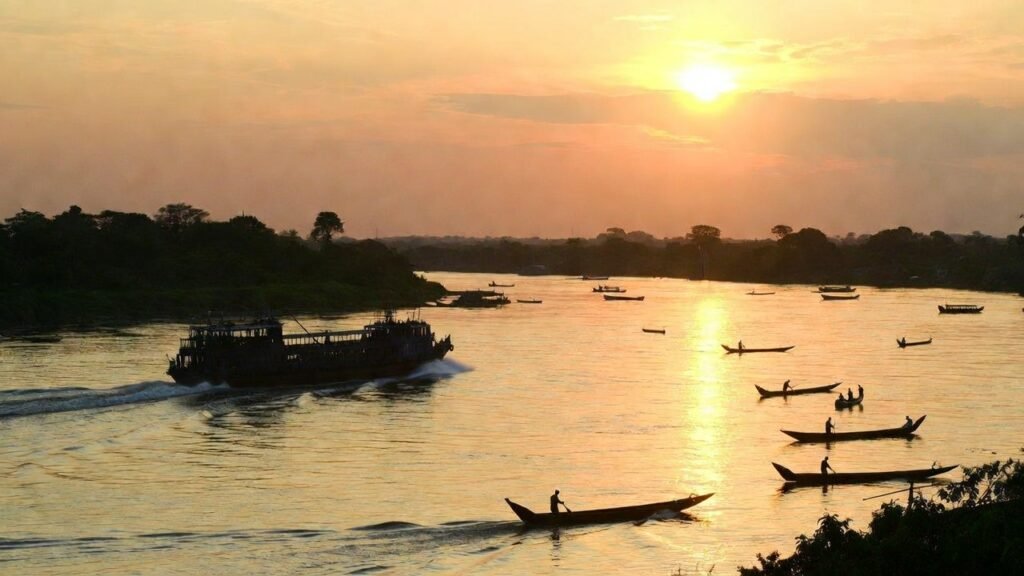
Think about how rivers support life. They provide water for drinking, farming, and fishing. They create pathways for movement and trade. They shape songs, stories, and spiritual beliefs. In many communities, rivers are not just resources—they are part of identity.
So when we ask, “Where do rivers come from?” we’re really asking a bigger question.
Do they begin at a specific point on a map? Or do they begin in the sky, in the rain? Do they begin in the soil, in the wetlands? Or do they begin in the relationships between land, water, and people?
Maybe the answer is all of the above.
But maybe the more important realization is this: a river is never just its source.
By the time the Congo River reaches its full power, it carries with it the story of Zambia, whether we acknowledge it or not. It carries the quiet beginnings of the Chambeshi. It carries the wetlands of Bangweulu. It carries the lives of people who may never see the ocean, but whose land contributes to a river that eventually reaches it.
That’s a powerful idea.
It means that what happens in one place matters far beyond that place.
It also means that identity—whether of a river or a people—is not fixed. It is shaped by movement, by connection, by shared experience.
Standing by a river in Zambia, you are not just looking at local water. You are looking at a journey in progress. That water will move on, join others, and become part of something much larger.
In the same way, no community exists in isolation.
We are all part of something flowing. So is the source of a river that droplet of water when it is in the sky, when it falls as rain, when it is in the soil, when it is in the river, or when is in the ocean?
Is that even the right question we should be asking ourselves?
And maybe that’s what rivers have been trying to teach us all along.
Not just where they come from—but how we are connected.
So the next time you see a river, don’t just think about its source. Think about its journey. Think about the places it will go, the lives it will touch, and the invisible threads it creates between people and landscapes.
Because somewhere in northern Zambia, a small stream is beginning again.
And it is already on its way to becoming something greater than itself.